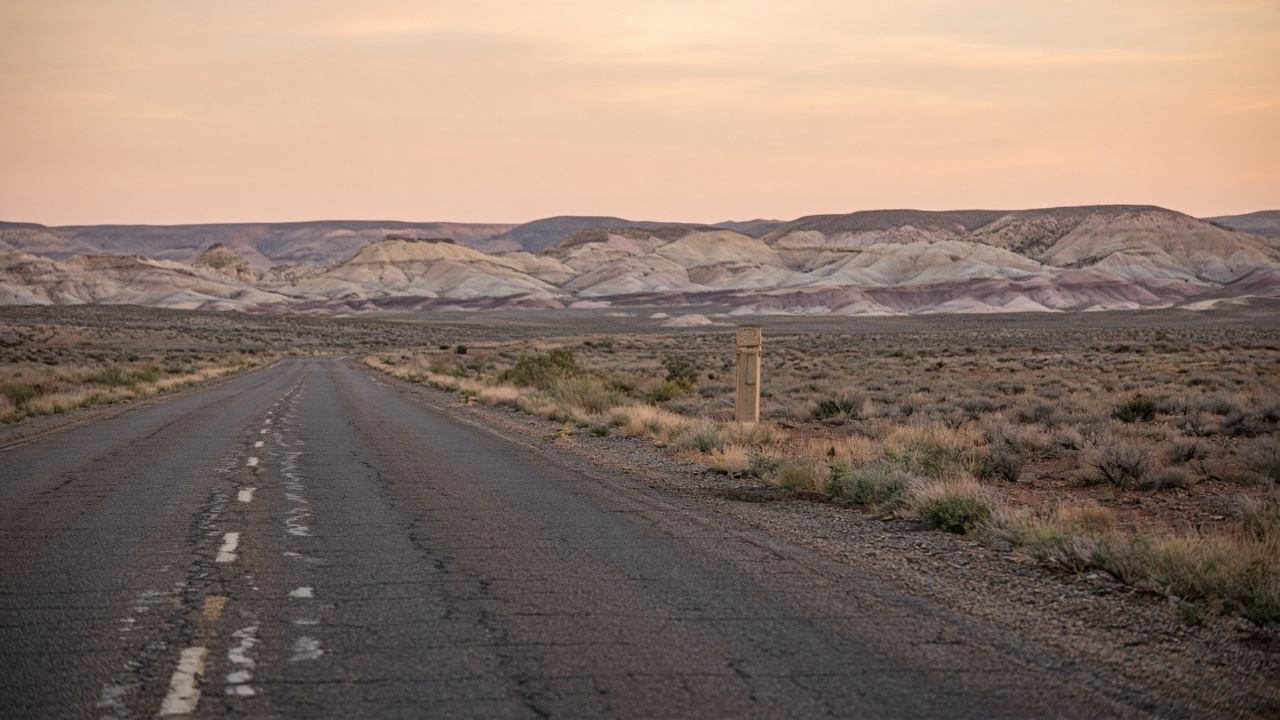
History as a Thin Layer
Fragments of Route 66 pass through Petrified Forest National Park and the Holbrook edge of painted country. They matter because they show how automobile travel opened deep-time landscapes to everyday visitors. They do not need neon, oversized flags, or theme-park chrome to earn that meaning.
Treat the road as one stratum among many. Above it sits open sky; beneath and beside it sit the clay hills explained in Desert Geology and the overlook craft of Painted Badlands. Fossil stops in Petrified Forest remain the scientific heart of the corridor; Route 66 is the cultural seam stitching park gates to town services.
Holbrook as Edge Base
Holbrook works as a small town at the desert’s edge: motels, cafés, calm streets, and a road that points back toward plateau light. Architecture should stay secondary—thistleford recommends keeping buildings under a quarter of your visual attention so geology remains the story. Overnight here, then re-enter the park after opening rather than inventing after-hours access.
Sequence Holbrook into Day 1 and Day 3 of the three-day itinerary, and use Scenic Routes for mile planning between overlooks and fossil walks.